Showing posts with label media. Show all posts

Wednesday, October 05, 2022

Your Brand lives in the Middle-of-the-Funnel

Building a brand is an eclectic process. A label is launched and it takes a lot of curation in the minds of consumers for that label to become a brand. Brand Custodians have always played this game of moulding  brands and getting consumers to rally around them. Because, ultimately it's the brand that is wanted and it is the brand that consumers pay (premium) for.

But, as the 'concept of time' has changed - the time that a business allows for a brand to be built or the time that a consumer gives to a brand to stay in his or her life - both have reduced considerably. This has certainly made the life of CMOs and Brand Managers so much more complicated and has had a huge impact on what we see brands doing in Media.

If, I were to simplistically breakup the typical brand Funnel into Top, Middle and Bottom: 

  • at the Top, we see a lot of broad advertising in Mass Media aimed at creating awareness for the brand; 
  • in the middle is where we typically measure brand metrics such as 'consideration', 'preference', 'affinity', etc;
  • at the Bottom, we see hard-core sales efforts which, in the digital world today take the form of Performance Advertising measured on Conversions to "Sales Metrics"

Each stage of the brand funnel is important, its never abut one over the other - but, it is about the balance between all stages of the consumer journey. 

While. the "Heritage" brands (those than have been there for long) are often accused of too much "Top Funnel" focus often referred to as 'spray & pray' - but, its to do with their distribution structure and the "distance" between the advertising stimulus and the opportunity to purchase or the point of purchase.  Of Course! we see a shift happening towards a more 'performance' mindset.  

On the other hand, the new age D2C Brands start with a huge "bottom-funnel" focus and as they grow, they steer towards sporadic but, high intensity & bold out-bursts on the top-funnel. Cant say, if it is right or wrong as the actions are defined basis the 'end-game' that the promoters have in mind. 

In both the scenarios, the Brand lives in the Middle-of-the-Funnel. Its what the brand does in the middle that defines sustainable success. The Top & Bottom are often the easiest to deploy as they are very tangible. 

The Top-Funnel is easily measured on the basis of media deliverables - reach/ grps, impressions, contacts, etc and also costed for the media deliverables. However, it is very distant from "end-sales'  and its effectiveness is often a mystery - best measured basis awareness measures or using complicated and long-term market-mix models to derive the actual ROI of such investments. Not to say that these investments are futile but, while media delivery measures are easy; effectiveness measures are difficult.

At the bottom of the funnel, usually sales or conversions is the last mile metric and is easy to measure. The measures are usually the amount of media deployed and the sales, transactions, conversions generated, The measures though easy, are often "mis-leading" as conversion measures just tell you 'the percentage of the consumers that crossed a stage' and not, the causality of the media investments or the effectiveness of the media investments. These measures have a lot of misattribution and unless brands managers are prudent - money gets spent on media that has a low ROI.

So, Top Funnel & Bottom Funnel measures and KPIs apparently are very tangible and hence, its an easy (not best) decision to spend on these. But, the Brand building happens in the Middle of the Funnel and that is the toughest space to manage. Brand Love/ Brand Preference/ Brand Image/ etc are intangibles and its also very difficult to assess what media placements will affect what aspects of the brand.

Irrespective of the 'Time-frame' Brand Building is essential. If there is a clear Brand Value which is what the consumers buy the brand for - then, the Top Funnel only Amplifies this Brand Identity to attract larger audiences to the Brand; and the Bottom-Funnel only monetises this Brand Asset by generating transactions for the Brand. Without a strong middle - both, Top Funnel as well as Bottom Funnel become unsustainable and fail to spur growth for the brand.

There is a continued debate in the market about the balance between "Performance" and "Brand" investments and rightly so - Feed the middle of the funnel else, the "Label" will never turn into a strong "Brand".  

Saturday, July 30, 2016

Recipe for a Media Plan

Of the things that I am passionate about - "media" is what I do professionally and "cooking" is another which I dabble in occasionally at home. There are a few more vocations that excite me but, today I am limiting the discussion to drawing some parallels between media and cooking :-).Lets talk a bit about the art of cooking first!!

The art of cooking is traditionally classified into different Cuisines which have evolved over generations. Each cuisine has its characteristic methods, cooking utensils/ tools, there are some characteristic ingredients and also a distinctive serving style. Then, there are different Chefs, each having their own signature style inspired from various cuisines; some play on dishes within a genre while some experiment across genres. The ingredients are universal and barring some limitations are available across borders to anyone who would want any ingredient. 

The success of a dish rests in the hands of the Chefs who have acute Knowledge of the cuisines, tools, ingredients and the cooking process or the recipe. They have trained over years and acquired Skills to craft the imagined dish using the tools/ ingredients. The dish to be cooked can only be imagined well if the Chef has a full appreciation of the wants and desires of the "Customers" to whom the dish is to be served. And finally, its the "Setting & Service" that makes the Experience worthwhile for the Customers.

The dish served is just not a "collection" of ingredients but ingredients - each treated in a specific manner; each ingredient fused into the dish at a different stage of the cooking process in a specific way that does best for the dish. A dish is only as good as the process of making the dish has been. Its the recipe that makes all the difference. It is the recipe that is guarded by chefs as that is proprietary.

It is the same for media planning too.

The ingredients for media planing - the creatives and the touch-points across media, are available for all to buy; but, what one does with these ingredients is the difference that makes a campaign successful or not. It is the process of making a plan that determines how good a plan is; it is the recipe of the plan that is the most important part of media planning.

Each Media agency has an underlying  philosophy that drives their thinking  and  that differentiates one agency from another. This philosophy gives a distinctive style to each agency just as each Cuisine has a distinctive style.

Each Agency has inherent knowledge and tools that are shared across the network and all planners are trained to adopt skills so that they can use this knowledge and tools proficiently in doing their daily business.

And, for using the knowledge and tools in the best way, the planners need to have a very sharp understanding of the ingredients (media touchpoints) and the customers taste (target group). 

So, a planner will be a Master-Planner only if, working on specific categories/ customers/ markets each planner develops ones own style of media planing within the recommended philosophy/ process of the media agency. 

Needless to say, a Master-Planner will always dish out media that makes a difference to the business of the clients.

Clients need to stop evaluating the ingredients of a media plan and start appreciating the recipe, knowledge, tools and skill set of the team that eventually make a plan successful. Yes, we do have to have an eye on the right side of the Menu, in view of our wallet but, the order has to be on the basis of which dish is the best.

Sunday, July 03, 2016

The Power of Context of TV GRPs

Advertising on Television comes naturally to every advertiser. It must be a rare advertiser who has the money to do a TVC but doesn't. In this note though, I am not debating the merits or de-merits of TV advertising. I want to focus on those who do decide to advertise on TV - and how do they thereafter use the Television medium.

Now, there are various ways of interacting with target consumers on television, But, I am not going to discuss the possibilities and the pros and cons of the options. We will  just talk about the most widely used method  - of airing the Brand TVC in the commercial break. I believe that over 95% of the monies spent on TV advertising are on the TVC so, that is what we should try to unravel.

It starts with a client brief for airing the TVC and all sorts of action start at the media agency end to propose the operating levels, edits to be used, phasing of the edits, weeks on air, genre structure, etc etc. While, all of the above decisions have a rationale and a process - all science here is based on the aggregation of thousands of TVC exposures. 

The TV Spot
Each insertion of the TVC is termed as a "spot". Each spot has views, termed as "impressions". The number of impressions depend on the number of people watching that channel at that point of time. These impressions expressed as a percentage of the total size of the target group are termed as the "rating or TVR" of the spot (simplistic view). So, there are multiple spots in a campaign, each resulting into impressions and delivering some TVRs and the sum total of these TVRs are what we call the GRPs (Gross Rating Points). As these GRPs accumulate over the campaign period, depending on the unique number of people who have seen the TVC and how many times each has seen the TVC, we derive the reach and frequency of the campaign. The rate at which a campaign reaches new people gives us what we call the reach build-up curve for the campaign.   

You see that in all of the measures above, there is no qualitative value attached to an exposure. Each exposure is like a grain of sand - each one same as the other. And, that is what I think needs to be fundamentally understood and realized before we start debating on the operating levels of any campaign.

The Right GRP
And, this is where the dilemma lies as there are different schools of thought about this. On the one hand, is the belief that each exposure is the same while, on the other hand the difference of each exposure is appreciated. 

For those who believe in the former, life is easy and it is all simple arithmetic to build a campaign - the objective often being to get the maximum GRPs or Reach@Frequency in the minimum cost. They are ignore to the nature of the GRPs as long as the aggregate of the GRPs delivers to them their campaign operating levels. In achieving the cheapest - their is a conscious disregard to an extent to spillovers, extent of over/under exposures, market intricacies, etc.

If we look at the school of thought that recognizes the difference in the GRPs - their life is certainly more complex.  The value delivered by each exposure depends on various dimensions of the exposure, such as the nature of programming, time of day, day of week, etc. These dimensions provide what we call "Context" for the exposure.

Understanding Context
The deliverable that we want from a TVC exposure is that it should be seen by the desired people and that these people should understand the messaging. So, the selection of the context should be based on whether it targets the right kind of people required for the brand in the right state of mind. The premise being that if the viewers are engaged in the context, they will also be engaged in the advertising and hence the probability for them to notice the TVC and to understand the TVC will be higher as against an exposure in a context which is not of high interest to them. Just like "a picture is worth a thousand words" - the right context is worth a whole lot of non-contextual GRPs.

Of course! there is always the pricing argument as most often than not, getting the right context is a compromise between cost, reach and quality.

The Measurement Challenge
But, all such discussions are limited by the nature of the syndicated TV measurement study which only provides data on the demographic audience so, one really does not know the equation between cost, reach and quality for the right brand audience. So, for an advertiser to have the right media plan one has to resort to planning metrics beyond what are provided by the syndicated TV measurement system.

The current TV system never advocated absolute reliance on its metrics for constructing the TV plan. All it provides are measures that are an aid to creating and measuring the TV plan deliveries, and on limited dimensions. These dimensions are adequate for trading of TV GRPs as the currency. However, it would be an injustice to media planing to rely just on this data for arriving at the construct of the plan.

Thus, the plan is only as good as the logic for its construct. And, once we have the construct one needs to translate this construct into a plan based on the limited dimensions available in the TV planning system. While, many attempt to do this but, in an effort to optimize investments in the TV planning system they often loose the construct of the media plan.

To illustrate - do we optimize on reach for the demographic audience as available in the measurement system or do we build in a factor of the reach among the real brand audience? Do we evaluate the efficiency of the plan on the cost per rating in the demographic audience or the cost per rating in the desired audience?  

Optimizing the Construct
The plan optimization needs to go beyond the TV measurement system to draw a balance between - total plan GRPs, total cost of the plan, cost per desired audience (not just the demographic audience) of the plan, reach and reach build-up in the desired audience, the engagement score of the plan, spillover in terms of audience & over-exposure, etc.

Unless, we build beyond the demographic measurement, we may be very happy with the plan deliveries but, what the campaign delivers for business is quite another matter - often not measured, if measured not calibrated and if calibrated, often based on the same belief of sameness of GRPs. Those who have been able to unravel the power of the context of TV GRPs are the ones who will get the most out of TV advertising.

The rest will keep rolling the drum without achieving the real objectives of the brand.. at least not in the most efficient way.

Wednesday, April 15, 2015

Are Clients really serious about Media ROI?

I have spent more than a decade now in the media industry and as a media agency representative, I have had the opportunity to work with scores of clients who invest crores of rupees on advertising. And, during this journey "Media ROI" has always been an item that has been discussed again and again.

Media ROI management is an exact science and there is a huge bank of knowledge that exists in academia on the subject. Globally, extensive work has been done by leading brands and agencies on establishing the ROI of media. However, there is very limited applied work that is available with any advertiser or agency in India to showcase Media ROI in action.

"Accountability" is the buzzword and the whole industry keeps talking of the need for media agencies to become accountable for the media investments being recommended for the clients. And, yes that is the right direction for the industry to move in. But, driving accountability requires an ecosystem that encourages this change. Unfortunately, I do not think any of the stakeholders in media are taking any significant or concrete steps to move in this direction.

Media ROI Management first of all requires establishing a relationship between the media investments and tangible business results; and, at the second level there is a need for attribution of the business results to various elements of the media mix thus deriving the ROI of each element of a campaign. However, these apparently simple steps are extremely challenging to execute in reality today and all the constituents of the media ecosystem (Clients, Agencies & Media Owners) are responsible for this situation. However, I am limiting this note only to the role that the Agencies and Clients have to play and shall deliberate on the Media Owners part at another time.

No, I am not shying away from the responsibility that the agencies have. Of course! the ultimate onus of establishing the Media ROI is on the media agencies as it is their business which is at stake but, they cant do it on their own. Over the years the media agencies have invested considerably in developing methods and tools and built statistical capabilities to be ROI-Ready.

But, there are certain responsibilities that have to be taken up by the advertisers to quantify Media ROI and there are three primary requirements that the advertisers need to provide towards this mission.  

First, is having a clarity on what is the measure that a particular campaign needs to drive. Of Course! revenue, profit margin, increased sales and market share are the final goals but, these are the financial goals which are generic to every business. A deeper investigation into the brand challenge is required to identify the specific objective that the campaign must deliver on. These specific objectives could be increasing the consumer base or driving higher per capita consumption, etc. Going a step further, advertisers need to have a diagnosis of what are the barriers to these objectives being achieved. 

The second requirement from the advertisers is to setup a system to measure and record the state of the brand on the measures referred to above, on a continuous basis. Yes, there are some advertisers who are quite evolved in this but, most others have still a long way to go.  There are clients that very generously invest in measuring market sales (for self and competitors) using syndicated retail audits and/ or setting up consumer panels. Also, some advertisers invest in Usage & Attitude Studies and Awareness Tracking studies which deliver a lot of the mind measures required to understand the brand challenges. 

The third and the last requirement is for the advertisers to record all the market interventions and changes in the marketing mix in a systemic manner (for self, and if possible for competition) as this data is very vital input to drawing inferences related to the attribution of cause of the movements in the state of the brand in the market. 

The media agencies have data and information that is limited to the media research available in the industry and all data beyond this has to be provided by the advertiser. With the growth of digital new data sources such as web-traffic, search volume data, volume of brand mentions, etc are becoming available which can also be accessed by the media agencies, but as of now that data has its limitations. It is also very critical that there be an integrated approach to develop this data ecosystem such that all these data are aligned to each other and can be used seamlessly for any further analysis. 

While crores get spent on advertising, there is an apparent resistance to make investments to setup the above mentioned systems even though these investments would be a very minute percentage of the advertising budgets. There is often an expectation from some clients that these investments should be borne by the agencies. But, looking at the media agency business model it is very unlikely that the agencies would ever be able to make these client specific investments. 

So, if Media ROI really matters to clients and they are serious that it should be an integral part of the evaluation of the performance of media, then that expectation has to be backed by these investments and this data should be seamlessly and continuously shared with the agencies. Of Course! there will never be perfect information and ultimately the agencies will work with what is finally available. Even today, work on establishing a relationship between media investments and business results continues across clients; but, with adequate data systems such work can become an integral part of the planning process.

And, lastly Clients need to realize that Media ROI management is a resource-intensive occupation and cannot come as part of the current client-agency remuneration arrangements.

I hope that all constituents will make due efforts to evolve and in the near future continuous measurement of Media ROI will be a feasible reality leading to higher investment efficiency and higher profitability for the Clients.

Monday, March 23, 2015

My TVC is ready. Now give me the Media Strategy!!

Yes, this is the classic approach that almost every advertiser is guilty of.

No, this is not a personal crib by a media agency guy because the client gives precedence to the TVC over the media strategy. I feel sad for the advertisers who behave in this manner, I feel sorry for the shareholders of the company whose money is not being spent prudently.

I am in no way suggesting that a TVC is not an important part of the media assets that build value for a brand; only that a TVC is not always the way to furthering the brand. In the current media landscape, there are scores of opportunities for brands to interact with consumers and to tell them about the strength of their brands. Before a decision is made about the manner of interaction that a brand chooses, a lot of investigation is required to understand the challenge for the brand in the market and the suitability of the various touchpoints available. It is only after such an elaborate investigation that a Brand should decide if a TVC is the best way forward.

Am I suggesting that advertisers do not investigate well enough before they decide to spend crores of Rupees on airing their TVCs. Yes, I am. 

Of course! there are some who are very elaborate in their analysis; but, for most advertisers, a TVC is the default way to express the brand idea. 

Every Brand has its unique situation in the market and according to the ambition of the brand in the market it has its specific challenges that it needs to overcome for the consumers to prefer it over competing brands. This challenge is a result of the nature of the category that the brand operates in; the mindset of the consumers that the brand is targeting and the type of competition that the brand faces in the category. While, for some it could be the lack of awareness about the brand; for others it could be the "perceived price-value" equation that a brand offers. The adverse "price-value" equation itself can have multiple dimensions and hence, multiple avenues which the brand can resort to for redress. It is imperative for the brands to arrive at the specific challenges that are a hurdle to their progress. The nature of interaction that a brand must have with the consumers is totally dependent on this challenge that a brand identifies. 

At the next level, there needs to be a comprehensive analysis of the options available to the brand to discuss this challenge with their prospective consumers and to arrive at the best way to interact with the consumers. I have great respect for the "creative" and I am sure that a good creative can solve any challenge even with the TVC approach. However, brands have the choice of a multitude of touchpoints; each having its own strength for different kinds of brand challenges. So, unless, there is some strong reason not to utilize touchpoints other than the TVC; brand need to go beyond the default TVC approach.

Media Strategy by definition, does all of the investigation stated above and proposes a structure for the communication campaign that the brand needs to execute for achieving the brand goals. This Communication Campaign is an enumeration of a set of activities, each of a specified intensity and duration that need to be triggered at specific times across different touchpoints to achieve the desired effect on the mindset or behaviour of the targeted set of consumers. A TVC may well be one of the activities in this set that the Media Strategy recommends.

It would do good to the brands to get their media agency to work with them to craft a comprehensive media strategy (also, in partnership with the creative agency and other stakeholders). And, if the recommended Communication Campaign calls for a TVC, so be it.

A TVC is a very powerful tool and if used effectively in the communication plan, it can change the fate of brands. Let us use it prudently. While, this article talks of a TVC, the same applies to many other media options that so often intrude in our daily life without affecting us in any meaningful way.

Tuesday, August 13, 2013

Mobile - the new kid on the block is taking over the media megaliths!!

Of Course! TV and Print have a long life ahead. but, Mobile as a media is rapidly making a place for itself.
 
One could have an unending debate on the above statement, as opinion today is very divided on the issue. Print in India has been around for over a century and is still growing. The advent of TV about 30 years ago started a debate on similar lines but even today both coexist and both are still growing. When Internet began its journey, again the market was abuzz with its omnipotent nature and how it would end the dominance of TV and Print. Its been about 20 years since but the balance of power has still not changed. Mobiles too, set foot in India about a decade ago and while their numbers have surpassed every other media, their role as a media has been marginal.
 
Yes, the above is true if one looks at the matter at a macro level ie at the All India level. However, if one were to look at specifc markets and segments the story is very different.  
 
Affluent Youth in Metros are a very attractive segment for media and marketers. This is a very small segment which constitutes not more than 5% of the population but is a very significant segment since consumers in this segment are very high on consumption of paid products and services, have voracious media consumption and are early adopters, influencers and change agents in society. This is an aspirational segment and a vast majority in India looks up to emulate their lifestyle. Their current media behaviour is a very good view of what the vast majority would be like in the near future.
 
Without delving too much into the numbers, lets just paint a picture of their relationship with various  media. A Smartphone or a Tablet is the primary media device in their life. They are connected 24x7 to the internet through this universal media device (UMD).
 
Yes, they read newspapers but, not the print editions. They access their favourite news brands either through their websites or news-apps installed on their smartphones. Of course! this is only when they have not already been updated through their social networks. They have special apps dedicated to each of their key interests that mash information from multiple sources and provide it in an easy snacking format that this segment is preferential to. Holding a newspaper every morning to start their day is really not a behaviour that they are habituated to and getting to read a paper edition is just incidental and not at all necessary.
 
Televsion still forms a significant part of their daily life. but, they are not unaccostomed to reaching out on their phone for their favourite content via youtube and various other mobile tv applications that are getting created everyday. Regulation of TV content and the limiting quality of display on a mobile (small size) are a barrier to them taking on to TV in a big way. However, it is just a matter of time before most of their TV viewing too shall be through their smartphones which are fast evolving into high quality multi-media devices.
 
Movies, music, socializing, information gathering, window shopping, actual shopping.. all are done via their smartphones. They value the content of the media houses across Radio, Cinema, TV & Print but interact with all the content only through their mobile phone or tablet.
 
Media companies have also seen all this but are at different stages of acceptance of this imminent reality. Their responses vary from a state of absolute denial to some who are very rapidly evolving their content and formats to suit mobile consumption.
 
Of course! the traditiional TV and Print are still the  mainstay for them from todays revenue perspective but, the situation will be very different in the near future. Mobile phones will constitue a dominant portion of their content consumption. Media brands that do not evolve will be relegated to the stone age.
 
Amongst all cell phone owners in India, smartphone ownership is less than 5% today. Imagine the situation when this ownership moves to double digit figures...
 
Mobile, is the most recent media. It is the new kid on the block. But, it is the medium which is growing at the fastest rate. And, with its growth it is phasing out other physical formats of media driving a convergence of all other media into its small screen.
 
If this scenario is too optimmistic for mobiles, let us look at a diametrically opposite segment such as the rural consumers.
 
Rural India still has a large population which is described as 'media dark' as they have extrmely low access to mass media. However, mobiles are reaching them at a faster rate everyday. In the absence of other media and various other infrastructure, this mobile is taking on a very central role in their lives. It is fast becoming their only mode of communication, information gathering and transacting. It is not long before cell phones in rural India too become their primary media devices.
 
No matter which way you take a peek at the future, the mobile is taking centrestage. Acceptance of the change is the first step for survival in the future. Media Houses, need to prepare for this future. Advertising and Communication have to upgrade their tools, techniques and philosophy to address a mobile-empowered consumer.
 
For the non-believers, I want to share this video which I saw in 2006. To many, at that time, it seemed a fantasy that would never become reality. See the video now and ponder on how much of that has already come true in the past 7 years.
 
 
The evolution and the impact of mobile on our lives and on the media business is going to be even more rapid and even more intense.
 
Yes, the mobile is taking over the media monoliths.

Tuesday, July 23, 2013

Green Advertising is Responsible Advertising

We are all extremely vocal about the ill-effects of SPAM and as users of email and mobiles use all available SPAM-Blockers to save ourselves from this malady. However, do we realize that there is an immense amount of SPAM that we encounter daily in consumption of various media?
 
I am referring to the huge amount of advertising that we see all around in TV, Newspapers, Outdoors, Magazines, Radio, etc which we have not solicited but is being thrust upon us. Just think about the number of advertisements in a newspaper on a typical day.. the number of ads in TV and radio.. the number of ads on hoardings and various other outdoor formats on the way to office.. the number of brand messages you see on internet.. the number of promotional calls/ messages you get on your mobiles.. the amount of promotional material displayed across shops and malls...
 
We have become so accustomed to this Advertising SPAM that most of it has become a blind-spot and we don't even raise our voice against it. This excessive & unsolicited advertising is a form of pollution.
 
The TRAI through its recent Notification on Quality of Service has taken a tough stance against this pollution in TV advertising making way for a pollution-free television media. When, I say pollution-free - I am not suggesting that we should have no advertising; but, advertising within "tolerable limits".
 
It should be the endeavour and responsibility of every stakeholder in the advertising industry to sustain the media environment such that advertising and communication do not disrupt the experience of the consumers. Such, an approach to advertising and communication is what I call as "Green Advertising".
 
The popular adage in advertising of "Jo Dikta Hai woh Bikta hai" has been over abused and there has been an on-going match amongst advertisers to out-shout their competition resulting in ever-increasing "noise levels" in media. Every year, this focus on increasing "share of voice" calls for higher and higher investments which only benefit the media houses but, continue to increase the irritation and pollution in media for consumers. It is also to be noted that ultimately, it is the consumer that pays for all the advertising as these advertising monies form part of the cost of the product/ service.
 
The infatuation of advertisers with their logo has made them blind to any concern whether the consumer wants to see their logo or not. They have forgotten the classical truth that "Size does not matter". It is not the size of the logo that impresses the cosumer but what it does for them. In my post "The Creative is killing Creativity", I have already talked about the excessive want of the advertisers to tell their "Brand Story" often forgetting the story of the consumer in the process.
 
Brands that deliver their communnication in a Green manner ie in a manner such that they do call for the attention of the consumers but not at the cost of disrupting their experience but, instead enhance the experience - are the brands that will be truly valued, loved and patronized by the consumers.
 
Green Advertising requires that every communication idea be evaluated for (i) notice-ability, (ii) relevance and significance to the consumers life, (iii) the leave-behind value for the consumer on interaction, (iv) uniquness or relate-ability to the brand  on the one hand and (i) disruptiveness and (ii) cost of implementation on the other.
 
The reduction in advertising time on TV as a result of the TRAI notification should only worry advertisers who believe that the reduction of volume of advertising will erode their brand opportunity. Advertising in a commercial break is only one form of communication - that is one-way, passive, ridden with clutter, ad-avoidance and weakening credibility. A little peek into the life of the consumer shall reveal many more opportunities to enage with the consumers.
 
Green Advertising is the way ahead. Will we be proactive and adopt it across the media ecosystem or shall we wait for more notifications to come before we stop spamming our consumers.
 
Go Green!!

Sunday, June 09, 2013

Client gets the work it deserves.

Media Agencies started as back-end print releasing departments of creative agencies many many years ago. The task of media releases was a menial task that the then industry leaders granted only 2.5% commission of the 15% that was available for the creative agencies.

As the media landscape has become more and more complex, the media agencies have risen to the challenge. Since then, the media agencies have evolved - upgraded their toolkit, added skill sets, increased the scope of services they can deliver and have come up as a formidable component of the advertising and communication industry.
 
Yes, the media agency still does media releases but a media release is just the tail end of all the valuable functions that a media agency performs.
 
No other entity has a better understanding of the media landscape of India. The largest media research agencies, the eminent consultancies, the rate-focused auditors, the tv-skewed creative agencies and the self-biased media houses - all barely skim the surface in understanding the media consumption patterns of today's consumer. A media agency is capable of a very clinical analysis of what media the consumer consumes and which touhpoints are best suited for brand communication.
 
Media Strategists today, are armed with databases and tools superior to what any other communication industry entity can either afford or has the commitment to develop. These tools enable media agencies to diagnose brand & consumer relationships and setup media tasks with great precision.
 
It is no longer about a TV or a Print Schedule but the design of the overall architechture of how the multiple media touchpoints included in a brand campaign are programmed to interact and influence the minds of consumers. Creativity is no longer the domain only of develpoing ad-creatives and is inherent in the methods by which media agencies design these media solutions for brand campaigns.
 
Overall, media agencies have skill sets and tools that are a fusion of consumer understanding, category & brand diagnosis, media understanding, creative solution design - all culminating into the function of preparing media-wise schedules (media plans), optimizing these plans to deliver cost-efficiency, releasing and monitoring each component of a brand campaign.
 
So much is available for a client when it signs on a media agency as an AOR. But, what a client is able to extract from the agency is directly related to the strength of their belief in what a media agency can/ should deliver; the focus of the senior management on working with the media agency as a partner; and an understanding of the overall deliverables that a media agency is capable of.
 
The media agencies have evolved over the past decade and are ready to deliver total communication solutions. The Client needs to review what he/ she is getting out of the media agency today and work towards getting more..getting more beyond implmentation planning & buying.
 
Ultimately, the Client will get what it demands (deserves).

Sunday, April 15, 2012

Know Your Customer (KYC)

KYC is a very talked about term theses days amongst most sales oriented organizations. In fact, among some domains (Telecom, Finance, etc) this is actually being enforced by the regulatory authorities. However, this is one aspect that agencies have to take up on a war footing.

No, no.. I dont mean to say that agencies dont know their customer.. it is a bit deeper than that..

It is one thing to know the people who "man" the various stations/ offices but quite another to know the business that they are in. And, that is what I mean that agencies need to understand the business because, it is the business or the brand who is the Customer for the agency.

Yes, no one will admit that they dont understand the business of their Client; but, conversely if I were to ask the Clients if they think that the people at their agency understand their business - the answer may not be a very sweet one. So, lets accept it - we know very little about our clients businesses.

And, this I believe is at the core of the usually publicized commoditization of agency deliverables.

In the absence of suitable knowledge about the business, the communication recommendations from the media as well as the creative agency would be limited to some very superficial idea about how their inputs and efforts would affect the business. The dialogue between the agency and the client is limited to only "media language" and does not graduate to "business talk" that really matters to the client. Unless, the Client appreciates our knowledge and understanding of his business - he/ she wont really give any weightage to any inputs in the realm of strategy.

Doing a campaign is a very transactional thing and we do these by the score - however, strategy is something which is very integral and cannot be done on the basis of the media knowledge only.

But, it is a chicken and egg story. Unless, we understand the business, the client wont involve us in the strategic process and unless we get involved in the strategic process - we wont really be able to understand the business. Anyways, the onus for change is on the agency - unless, the agency is happy just delivering vanilla media campaigns and over a period of time getting more and more marginalized and commoditized.

So, the new mantra of "KYC" has to be taken up by the agencies in earnest and impute the learnings into the process of media solution design. This stance of KYC would need re-orientation of skillsets and resources so that the focus is on the strategic and not just the transactional deliveries.

Lastly, I would say that the ultimate beneficiaries of an agency that understands their business - shall be the clients themselves. Hence, the Clients must encourage this shift and not keep the agency at arms-length when it comes to sharing knowledge and information about their business.

Only, an agency that knows your business can grow your business!!

Monday, October 03, 2011

Stop Over-Simplification of Media

While, the core thought of this article about 'over-simplification' may apply to the overall domain of marketing, but I am using the setting of media planning to construct the view.

Lets, first see what is the task or challenge that the media agencies take up in their business.

Every advertiser expects the media planning agency to deliver performance for its business metrics. That is to say that - once a media plan is executed the brand manager expects sales to happen.

Enough has been said about the increasing complexity of the market, the increasingly unpredictable and demanding consumer and the decreasing strength of brands. In such a scenario, the factors that lead to sales success are many. The classical models of marketing have now been replaced by far more dynamic models and media is only one of the many factors that influence sales. Hence, this is not a simple or easy expectation at all.

Even a little bit of analytics will reveal that media has only got limited leverage to drive sales and this leverage varies for different categories and brands. However, there are other interim metrics leading to sales, such as brand recall, brand perception, brand enquiry, brand interactions, etc for which media can be held accountable for. There are so many marketing models and methods that help understand what a brand needs to deliver in media. None of these methods are simple.

Looking at 'media' in isolation and expecting it to deliver sales is a naive simplification.

Media Planning is an intricate science. It deals with engaging extremely incredulous and volatile consumers to convince them of the merits of one of the score of brands that are available to them and possibly get them to move closer to buying the brand. In short, it deals with the wants and desires of people which can never be a simple subject to address.

However, somewhere along the way in the past agencies have made advertises believe that this complex task can be broken up into two simple steps - (i) design the message and (ii) deliver the message to the desired consumer segment.

Here, I will not comment on designing the message since I have already touched upon that in my earlier post titled "Creative is killing Creativity". Lets look at the inherent simplification that has been cultivated in delivering the message.

The first simplification was to strip each medium of its "qualitative" values and believe that each vehicle in a medium and across mediums can be represented by the measure of only "quantity".

This made it very easy to measure media and trade media. One was only bothered about the count or reach as we call it. Research agencies made a killing setting up mammoth research projects measuring this lowest common denominator across media. Yes, there was a qualitative aspect but that was left to interpretation and application by the media planners. Now, we have the media planing community largely addicted and servile to these quantitative research databases totally oblivious to the qualitative value of the media they recommend. 

The second simplification was to believe that consumer minds can be affected just by managing the volume of this media measure.

The GRP was conceived - which is another simplification of the arithmetic that goes into making a media schedule and this GRP became the volume measure of  voice of the brand. Due to its simplicity, clients took to GRPs easily and it soon became a strong trading currency for media. Today, everything that is done is to create, deliver, manage, buy, sell - this GRP. This GRP comes in various reach and frequency packs and is available across media. This GRP has become the magic wand with which the client and the agency attempt to deliver market shares.

The simplification is also evident in the remuneration structure that is prevalent in the industry. Everything that is done in communication is measured in terms of the traded value of media bought and the agencies are paid as a percentage of that. Since, actually estimating the real value contributed by media is difficult - so a percentage of spends keeps it simple.

I guess, the whole media eco-system looks at the issues too simplistically and that is why "value-creation" is reducing day by day and leading to commoditization of media, media schedules, media talent and of media agencies. The advertisers will continue to simplify, but if, the media and advertising domain wants to enhance its value they will have to do away with this over-simplification. After all, Value is in the details.
  

Sunday, September 25, 2011

Media as an Ingredient

There was a time when the usage of media was optional. Media was an add-on which if a brand so desired or if needed would use to spur sales.

When, I look at this from the cooking perspective (since, I love cooking a lot) I would say that media was used just as a garnish. Yes, it did make the dish seem more desirable and added some flavours but one could certainly do without it.

Media was never appreciated. When the sales were healthy - there was no need for media and when the brand was in dire straits and there was strain on profitability - media was the first to be curtailed.

But, those were the times of the seller; the consumer then was a deprived citizen and had no say or choice in what was being served to him. The seller prepared the product and used media just to 'inform' the consumer either of its existence, its merits or its price. Media was never embedded in the value creation that the product or service promised; it was so far only communicating the value. Hence, the use of media was need based.

The world has changed. Consumer is King.

It is not about the seller asking the consumer about what they want and then manufacturing the product or service accordingly. The matters have progressed far beyond that. The sellers are no longer in control. They have morphed from brand owners to brand custodians to just being brand moderators. Despite all the theory that existed - the brand in the yester years was still in the mind of the brand owner (with due feedback and research of the consumer). But, now the consumer is in control of the brand. 

Here, when I say consumer  it is again different from the consumer of yester years. Earlier you would imagine the consumer as an individual (or a number of individuals - not connected to one another) but today the the consumer is a group - a group of connected and communicating people. Earlier, the consumer was a multitude of individuals but now is a Collective.

More and more products and services are being designed so that their consumption also happens or heightens when consumed as a Collective. And, these are not being designed by just the companies. The companies are a participant in this collective along with the consumers. Media runs as blood in the veins of this collective binding the consumers to each other and hence media is intrinsic to the construction of the brand.

Media is no longer an add-on; no longer a garnish; no longer need-based.

Media is critical and essential to the construction of the brand and the consumption of the brand.

Media has become an ingredient for the brand.

Brands that still treat media as an add-on have a lot of thinking to do. And, the day brands change this perspective - I am sure they will start looking differently at how they select and integrate media into their value promise. This will change the value they attribute to media in their P&L and will also impact the remuneration they pay for those who advise them on media. 

Media is no longer a garnish, but is a critical ingredient in the brand.

Future of TV in India

The Campaign A-List has collated the responses of over 300 Senior Professional from the Media Industry. In a recent, blog post "A-List of Changes"  I discussed what are the changes that these professional seek from media and advertising. Here, I am presenting a review of what all do they specifically expect to change in Television.

Here, of course I am ignoring ideas that are too extreme (like - ban TV) or too difficult to digest (such as - add smells to TV). Of course! TV was one of the mediums that had the most variety of comments for its future. I have classified these comments in 5 broad categories, each concerned about the following:

  • The TV Technology
  • The Advertising on TV
  • TV Content
  • Pricing of TV Commercial Time
  • Research & Measurement for TV
The slide here illustrates the different comments received and hence gives a glimpse of the changes once can hope for in the future.


The A-List is most worried about the overdose of advertising. Hence, in the future of TV wants ad-free channels, limit commercial time, limit ad-durations, limit frequency of ads, zap commercials, stop TV tickers and logos on screen, and so on.  


Overall, in TV Technology the Media Seniors want to have 2-way communication on TV thus making it Interactive. Other wants are - digitization of Cable, making TV HD, Addressability for DTH. Yes, they also want to have a like/dislike button on TV for giving feedback on content and advertising.


In Content, the primary concern is for News Channels about paid news, anchors getting hysterical and dramatization of news.


The Creative people still have not had enough of indulgence in Television and are dreaming of having cheaper ad-rates so that they can make longer duration ads - since 30s is just not enough to tell a story.


TV Measurement as always is wanting - larger sample and better coverage but this time there is more concern about what we are measuring. Instead of TVRs, the A-List seeks to have TV Respect Points and TV Watchability Ratings. Advertisers want to go beyond CPRPs to Ad-effectiveness measures and Impact measures.


Interesting thoughts, which if materialized will certainly change TV for the better in the future. So, I sincerely hope that the A-List is able to bring in the changes that they seek - for if they cant then who else can !!!

Sunday, September 18, 2011

A-List of Changes

All of us have our own view of the future of media and advertising and each one of us is working towards the changes one wants to make on the media canvass. But, have you ever wondered what is the collective view of such individual wishes and actions?

Well, here is a perspective.

I looked at the recently released A-List - courtesy Campaign India and Dainik Bhaskar Group. About 300 media professional shared their view on what they would want to change in media. I must say, it was very interesting reading - at times entertaining, some views shocking, some thought-provking and insightful; but overall - a read full of learning.

It was so exciting to read what all different people envision for the future of different media. There are different personalities that emerge from a simple analysis of this document:

the extremists - who want to totally ban some media;
the romantics - who still want the old era charm to be retained even in the new media;
the dreamers - who want no limits to creative expression;
the technologists - who want to infuse better technology across media;
the liberals - who are either not concerned or believe that change is anyways happening;
the accountants - who want more measures to do better evaluations;
the believers - who believe that all is well and no change is required;

.... and so on.. cant think of any more categories..

But, what is the big-picture that this A-list reveals for the media industry. What are their primary issues and concerns? And, these are best captured in this word map below on the basis of the changes that are sought in this media industry.


The primary themes that I read from this for the future of media here in India can be listed below:
  • Reduce, Stop, Ban, Remove, Spam, Clutter, Less: Less advertising clutter
  • Interactive: Every media to seek 2-way communication
  • Measurement, Effectiveness: Better measurement and evaluation
  • Digital, Bandwidth, Internet: Digital has arrived
  • Accountability, Transparency, Truth: Responsible business dealings
  • Better, Aesthetics, Cheaper: Deliver More in Less

The changes wanted most badly - by the number of people suggesting these are the following (not in any order):
  • Stop Half-Jackets on newspapers
  • Spare the Newspaper Front Page
  • Reduce TV advertising Clutter
  • Stop SPAM on Mobiles
  • Remove Ugly Outdoor
  • Remove 'intrusions' in content on TV
  • Reduce Celebrities in Ads
  • Better Measurement for OOH
  • Better Measurement for Digital
  • Reduce regulation for Radio

I would love to discuss each media in detail separately, as the expectations of different people from each media are so different. While, some want to ban a media; some are looking to regulate it; some want to indulge in it for their creative delight; some want to re-orient it for the future; some are worried about measurement and some about its rate....

But, I will decide to write on that basis feedback on this write-up. Hope you found this interesting.

Monday, September 05, 2011

The "Creative" is killing "Creativity"

In a quote that I gave for a certain magazine recently, I mentioned that "The Creative" in advertising is overrated and that needs to change. I thought to qualify this statement a bit more elaborately here.

In the domain of brand communication today - the "creative" is considered the most important element. Everything revolves around the creative. And why shouldn't it be so? So many, brands have become household names just because of the creative.

Who can forget the ministrations of Lalitaji of Surf or the Rekha, Jaya Sushma of Nirma. The hummable Hamara Bajaj or the wonderful BPL Washing Machines. Har Ek Friend Zaroori Hota Hai, Zoo Zoos, and the list can go on. OK Sabun, Tandoorusti Ki Raksha, Vimal, Hari Sadu....and many more..

All these creatives are darlings of India and have made the future of their brands, brand managers and of the creative directors too. Here, I am being very generous and actually giving credit of the brand success only to the creative so no one reading this can accuse me of being anti-creative.

But, lets look beyond these successes. For every creative that delighted India there are a thousand that made it to the hate list. Thousands of ads that went into anonymity; thousands of ads that wasted crores of advertising rupees again and again every year. 

Today, Television and Print advertising has almost become a tradition. No one questions why a brand needs TV or Print advertising - the question only is when, what and How Much. Going beyond the traditional is rare.

Dont mistake that I am saying dont advertise.. Do advertise.. but we need to appreciate that the word "Advertisement" has changed since we last reviewed it.

In the days of limited media (thats my fav way of referring to the traditional advertising days) the creative canvas was a "single media". Yes, there was advertising on multiple media but creative in each media was crafted alone. And, each such piece crafted was called the "Creative". We have been so enchanted by the creative as professionals that we didnt even realize when the audience for whom we were making the creative  - lost interest in it.

And, despite repeated studies showing alarming levels of ad-avoidance we still continue to be mesmerized by our own creatives. At times, I feel some brand custodians (this includes brand managers, account & media planners and creatives) are too obsessed and end up creating Innovations (costing multiples of  what a simple creative would have cost) that are surely clutter breaking but also totally meaning less for the consumer. These are what I call "Brand Managers Delights".

So "Advertisement" was about the Brand telling the audiences "I (Brand) will give you entertainment by showing you a creative in this boring media space, but there will be my message in the creative too" and it worked THEN. But, that is what the brand custodians continue to attempt even today when the audience is not dependent upon the Creative for entertainment - the media content by itself is entertaining and absorbing enough. In fact, the same creative is becoming a disruption in entertainment.

Now "Advertisement" is about active engagement of the audience and not just passive viewing/ reading. And, for this active engagement  today we have at our disposal very powerful  media that is targeted, addressable, pull, portable, interactive, measurable, reviewable, expandable, refer-able, mashable, fuse-able, etc besides the fact that advertising messages need not be restrained within the bounds of "ad-break".

The audience too is far more 'available' and hence is open to participation and activation more than ever before.

With such potential media and options available to us to share the brand with the consumers, if we still do not venture beyond the "creative" and dont indulge our creativity in utilizing this multi-dimensional canvass to actively engage the consumers - I think we are limiting our creativity,

The needless, un-investigated, traditional focus on the "creative" is killing "Creativity".

Monday, July 25, 2011

Media Research - Connecting v/s Counting

The IRS counts how many people read a newspaper or a magazine or whatever other media is covered; TAM counts the number of people who watched a program; RAM counts the number of people listening etc. We debate how while dailies should be counted; but for magazines we should do less of the counting and do something else because they can never beat the dailies in the counting. All the media research that we use is mostly about counting - whereas they all should actually be about connecting.

I keep saying that the era of 'limited media' is over and it was in that era of limited media that counting media was of import. But, now in days of 'over-supply of media' its naive to be still only counting. What really matters is for us to understand how the media-vehicle and the consumer connect with each other. So if we can understand what makes them connect - we can enhance the experience further also by creating opportunities for brands to participate in the 'connecting'.

'Connecting' is about understanding what the media does to the consumer. A media vehicle is not just the masthead or the content - in consuming a media vehicle the consumer experience is a net result of the feelings associated with the medium from the past, the content and also the manner of presentation. This is the same as it is for any other product or service for the consumer.

The research done so far has served us well. But, now the markets have evolved and the same research is in-adequate. The existing research besides being revised needs to be supplemented with research that aids understanding and connecting. Each brand has a different relationship with the consumer and hence for each brand the manner of engagement via media  would be different. From an advertisers perspective therefore, the research needs to advise the brand on the best manner to engage with the consumer. The media brand itself needs to understand what affect the brand has on the consumer so that it can further orient itself to enhance the experience of the consumer.

So far, with the syndicated research available - we know how many people read a newspaper/ magazine or how may people watch/ listen to a broadcast, etc but we have no idea how their interaction with the media makes them feel. Without this kind of information about the relationship between the media and the consumer; the manner in which the brands utilize media to communicate with the consumer often ends up being very trivial, superficial and irrelevant to the consumer.

To enable brands to build a meaningful connection with the consumer - the media research must be recrafted to focus on Connecting rather than on Counting. 

Sunday, July 10, 2011

Media Fragmentation - an Opportunity.

It is the era of choices for the consumer in every sphere of their lives. And, as the consumer exercises these choices - the consumers life is becoming more and more fragmented. And, it is this fragmentation of the consumers life that is the cause of the phenomenon called media fragmentation.


For each role that the consumer plays in life, for every community that the consumer is engaged with, for every mood that the consumer feels daily, for every task that the consumer needs to complete - there is a different set of media that the consumer interacts with. In each of the above scenarios not just the set of media but also the manner of interaction with the media changes. The expectations from the media are different, the affinity that the consumer feels for different media changes and the effect that each media has on the consumer also varies.


Thus, the term media fragmentation doesnt encompass just the multiplicity of media but also the complexity of its relationship with the consumer. And, in such a scenario the task of the brand manager remains the same as ever - to create an affinity for the brand in the mind of the consumer.


For a mind addicted to the limited means of communication using conventional TV and Print - this scenario is a certain threat but to one who looks at the consumer and media landscape afresh everyday this is a great opportunity. Differentiation is key to brand building and in yester years it was only the creative that offered the key to differentiation in communication while now the choice of media and the manner of use of the media to communuicate with the consumer play as much a role in creating this differentiation for a brand.


In the era of limited media - basis the reach of media first the media to be used for communication was identified and the creative was developed specific to the media. Of course!! Reach of the media is critical but the first step now is to develop an 'idea' for the consumer and then layer this idea with media that best suits the idea. Communication Planning has turned inside-out.


It is this 'idea' that strings together the activity done with each media. In the absence of the connecting idea - the consumer just sees a set of dis-connected exposures/ activities at different times. But, if all the fragmented media activites have the idea at the core then these together form a beautiful collage with each media working in tandem - and to the consumer it is all 'one story'.


Brand managers today interact with so many partners each bringing to them capabilities of working on specific media and in this 'variety' of partners the connnecting idea is very vulnerable to getting diluted. Companies, cannnot afford that this conecting idea gets diluted as it would impact the communication ROI. While, on reach and cost metrics the individual media plans may perform brilliantly - the overall communication effectiveness could be adversley affected.  And, this is where 'media strategists' have a key role to play in organizations. While, the brand managers are best equipped to decide on the 'connecting idea'; it is the media strategists who can best work on its execution along with the multitude of media/ agency  partners.


So, to conclude - media fragmentation is here and only increasing. For brands to utilize it as a opportunity rather than to see it as a threat there is need for an increased focus on communication design vis-vis media planning. To the consumer, only an ill-designed campaign appears fragmented.  

Friday, July 08, 2011

SEC System - an endangered marketing concept.

Yes, maybe a few years from now we wont be as much in need of the SEC System as we are today. It is a system that has served us well but it is time we get ready to park it in the archives.

Marketing is a social science - it is about people. And, people are a complex system - each person is unique in more ways than one. But, as markets expanded, marketers got distanced from their customers - and gradually each customer just became a statistic in the marketers books. The expanding marketing eco-system then needed a language to transact this statistic and the SEC System evolved. As happens with most transaction currencies, they proper on unity of value and dimish the multi-dimensional acpects of the product itself. Likewise, the SEC System took a very simplified (uni-dimensional) view of the consumer and shoved consumers into some very dark cells of this SEC Grid.

It was also not possible for the marketers to do much different as a collective. Organizations did not have the technology and the resources to manage one-to-one relationships with customers. Every interaction of the brand was a broadcast to a segment of the population. SEC provided a viable method to refer to this population, to group them, to study them and to communicate with them.

For decades we have designed products, services, communication - all for these boxes often caring least about the unique multi-dimensional personalities in these cells. But, gone are the times when the consumer allowed himself/ herself to be confined to these cells. The times are a changing.

Now we are in a connected world. The marketer is no more far removed from the consumer. The consumer is no more a stranger for the marketer. Yes, the mind of the consumer may still be an enigma as always but atleast, the physical presence of the consumer is very well recorded. Today, the marketer at times knows more about the consumer than the consumer himself/ herself. Every day brands are establishing one-to-one connections with the consumers.

When, interacting with other functions of the marketing eco-system such as research or communication companies, brands are lesser and lesser dependent on refering to their consumers by the SEC. The comsumer profiles are far more specific. We already talk of attitudes, psychorgaphics, consumption behaviour, future intentions and so much more. With newage digital technologies of 'tagging' - customer definitions are becoming more and more specific and dynamic. The innumerable tags that today define consumers in the digital world can never fit into a system as simplistic as the SEC.

With the advent of digital technology consumers have now emerged from the SEC boxes and marketers are treating them as real people. Yes, it will be sad to see the SEC system set aside but I am sure this change shall lead the consumers to more delightful products, services and communication that is more human and personal.

Of course! we still turn to candles when the latest tecnology fails and plummets the world into darkness - so also we will always look to the SEC System to throw its frail but guiding light on to consumers as and when we stumble into darkness.

Friday, April 29, 2011

Media - Child's Play

Have you seen and remember the movie named "BIG" of Tom Hanks. A delight to watch like most Tom Hanks movies - the story is how a kid makes a wish of becoming an adult and his wish is fulfilled overnight. Now, other than all the funny situations that the movie takes you through - it shows how the kid becomes successful in a Toy company. The company is managed by adults and our Adult-Kid is the only one who understands kids in the true sense and so is able to make the best toys for the kids.

Do watch the movie if you already haven't :-).

Today, we need a "Kid" in many companies especially from the perspective of "media". Most managers in even very senior positions have grown up in the media-environment of the yester years and just cant fathom the relationship between the new media formats and the new generations.
I am past 40 and was born in the non-TV era of India. Till then Radio was the favoured media and Amin Sayani was a celebrity. At 8.00 am in the morning there used to be pin-drop silence as our father listed to the "News" on Radio. And, at 8.00 pm at night our whole family huddled around the radio to listen to "Hawa-Mahal" the prime-time hit on Vividh Bharti. We used to be scolded by our parents for getting spoilt and whiling away our time and future if we were caught listening to songs on the Radio. The announcements of the farmaishi programs and the farmish from Jumri-Talaya and the Fauji Bhaiyon ke liye..etc are still so etched in our memories.


We saw the mass roll-out of the TV Stations while we were in school. I suppose they were inaugurating a TV-transmitter a day for a year or so. We used to wait for the TV telecast to start so that we could watch the starting Doordarshan Signature Montage.  TV was telecast only on DD-1 to start with and that too only for limited hours in a day. We only had black&white TVs and some enterprising people used to put a coloured screens over their black & while TV to get a feeling of coloured TV. Don't laugh :-). Of course, having a 8 channel TV was considered a waste of investment since there was only one channel. A remote was unknown. Gradually, DD-2 started and gradually channels increased. And, mind you there used to TV Antennas on the buildings and it was such a nuisance when the kite season started. But, size mattered even then.. the rich people had big TVs and big Antennae too. Going to a neighbours house and 20 - 30 people sitting and watching a cricket match or a Sunday movie or the mega-serials is an something many in my age group will identify with. Chitrahaar was the ultimate song show and it gave a beating to the radio songs.

All this while the newspaper was a stable and sure media in most houses. There used to be one newspaper in the city (2 - 3 at max in larger cities) and we used to get the same newspaper for years and years.. so much so that the newspaper vendor was like a family member due to the long relationship. Not getting the newspaper used to cause a lot of physical and emotional trauma to the elders in the house. We used to be told to read the newspaper to improve our English and to prepare for GK in competitive exams as we grew up. Borrowing Newspaper from neighbours though a subject of many jokes was a reality too.

Magazines were few but we used to read them cover to cover. The Illustrated Weekly, the India Today, Readers Digest, Sarika, Greh Shobha, Champak, Mirror, Span and so on.. were some of the favourites I can recall.

It was quite a time before the "cable" happened and Zee TV took the fancy of India with its fancy song-shows and the proliferation of channels was started. The content available exploded and I remember studies that were done and articles that used to be written how the TV was going to be the doom of the next generation. Parents used to lock-up the TV in a box during exams. TV was held responsible for eye-sight problems, education problems and many more social ills.

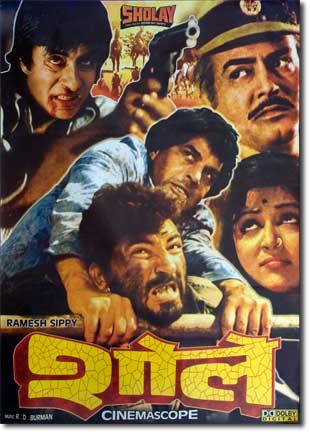
Cinema was a loved media though it used to take a lot of dare to go for a movie in the first few week of release. Good movies used to go on on theatres for at least a few months and the classics blocked theatres for over an year. English movies used to  release in select theatres and either were the classics or the adult types. Movie going used to be a family affair often with neighbours and relatives included. We used to listen to full audio of the films on radio or on cassettes. I remember my cousin who not only had seen Sholay for over a dozen times but could mouth the while story with dialogues, songs and a fair amount of background music too.

So far, we had heard of computers only in newspapers and magazines and paperback novels. Internet was a word we had never heard. On Star Trek serial which was the most sci-fi thing for us ever - we used to wonder at the "Communicator" never even imagining that we all would be carrying one a decade later.  Telephone had advanced a lot and now we did not have to go to the Telephone Exchange to make a Truck-Call but had STD at home :-).

A trip to the post office was customary almost every week and it used to be a chore to sit and write letters to friends and relatives who would maybe write back to us in a reply that would reach us a few weeks later at the earliest. Looking back now it seemed like a conversation in slow motion. We used to know the location of all the post-boxes in the vicinity and knew the pickup times from them too. The postman also was like a family member and I remember how we used to wait for him on the road to our house to intercept the "report-card" from reaching to our parents :-). The yellow post card, the blue inland letter, the international letter, the envelope, the registered post, the money order.. there was so much to manage..

Hoardings were few and we never paid heed to any but still recall the Amul one which we used to see on our way to school. Besides, that it was only movie releases that used to be on hoardings or paper posters plastered across the city.

That was all till I guess I turned about 20. That was one generation and the amount of change that happened in the next 20 years can be termed phenomenal. We now have over 400 TV channels, a dozen radio stations per city, a multitude of newspapers and a score of supplements, hundreds of magazines,  mobile phones and Internet rule our lives, the post-office is a relic while we move ahead with emails, chats, facebook updates and tweets communicating in micro seconds.... I wont describe this much. .just look around you.. the world has totally changed...and the relationship of the young today with media is far more transitory than the manner in which we used to engage with it. .but paradoxically is far more interleaved into their lives than it ever was in our days. Earlier, it was just an add-on but now it is a part of life.

And, this changed media world requires brands and media custodians to use media very differently but most of the managers as I said belong either to my generation or earlier. Howsoever much, we may claim to understand the perspective of the young.. we cant even come close to their realityy. So, if we really want to apply media and design media solutions for the current generation, we need to get them into our teams.. 

Just as in the movie Big, the kid coming into the toy company turned their fortunes so will the fortunes of our  companies change if we induct the kids into our teams. Lets go for the BIG change.